

21 Nov 2026
Picture two self-storage facilities five miles apart. Same size, similar buildings, similar towns. On paper they look almost identical. Yet one can turn out to be a sound investment and the other a disappointment.
The difference is rarely the hallways, doors and roofs. It's the people running the business.
That's the idea at the heart of how we invest at Scaffold Partners, and it's the most common mistake we see passive real estate investors make: they focus on the property, and not enough on the people operating it or the assumptions behind the numbers.
The problem busy investors face
Many successful professionals, business owners, doctors, lawyers, pilots and retirees, see real estate as a sensible way to diversify beyond the stock market. What they usually don't have is the time, the expertise or the relationships to evaluate private real estate on their own.
In practice they run into three problems:
- Access. High-quality deals are hard to find, and the best ones rarely reach the open market.
- Operator risk. It's very difficult for an outsider to judge whether an operator is genuinely good at running the business.
- Fragmented markets. Smaller markets are full of opportunity, but they're hard to read from a distance.
Our role is to close that gap: to do the evaluation, the screening and the ongoing oversight that a busy investor can't do alone.
Why self-storage, and why smaller markets
We came to self-storage after years in multifamily real estate, because the asset class suits a disciplined, hands-on approach:
- Simple buildings. Hallways, doors and roofs. Very little plumbing and no residential tenants.
- Short leases. Pricing can be adjusted as the market and inflation move, rather than being locked in for years.
- A fragmented industry. A large share of facilities are still run by small, independent owners.
That last point matters. In secondary and smaller markets, many facilities are run by "mom and pop" owners without modern systems: no online booking, little online presence, no tenant insurance, rents that haven't kept up with the market. That's where a skilled operator can make real operational improvements. We deliberately look there because we would rather choose our competition than go head to head with the largest institutions in the biggest cities.
A good operator can lift a mediocre property. A bad one can ruin a great one.
Self-storage is an operating business as much as it is a real estate investment. Leasing, pricing, marketing, staffing and cost control all depend on the operator. So before we look closely at any deal, we look closely at the people bringing it to us:
- What is their track record with comparable properties, markets and strategies?
- How do they execute: who handles leasing, pricing and marketing, and how?
- How disciplined are they with budgets and expenses?
- Are they willing to put their own money into the deal alongside investors?
- What kind of partner will they be when things don't go to plan?
We work with only a small number of carefully selected operators. In our view, that selectivity is a large part of the value we bring.
Skin in the game
We invest alongside our investors, with transparent fees and profit structures, so that we do well only when our investors do well. We would much rather turn down a deal than put the people who trust us into the wrong one. And we turn down most of the deals we see: sometimes the operator lacks experience in that market, sometimes the price doesn't work once financing costs are factored in, sometimes the projections simply aren't realistic, and sometimes the market has too much new supply.
Hear the full conversation
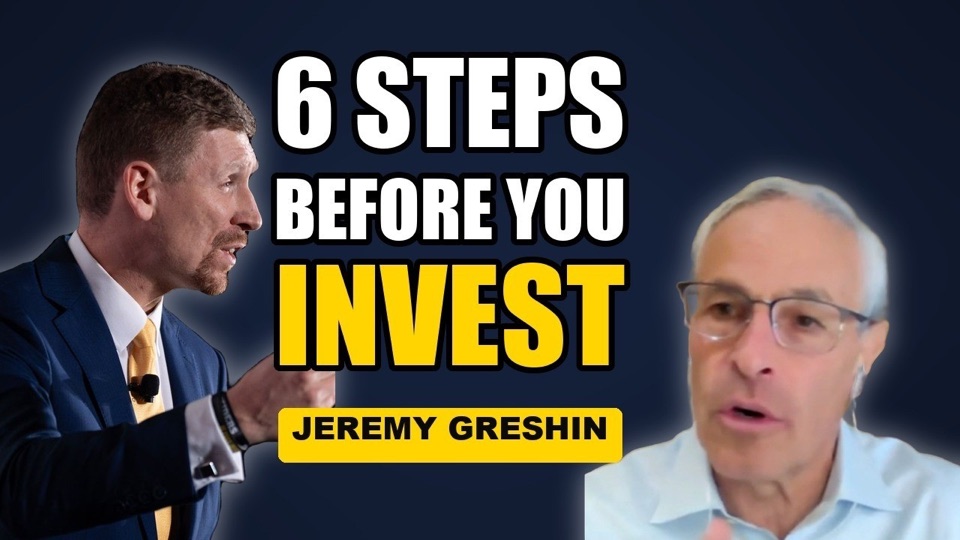
Jeremy talked through our six-step process in detail on the Business Breakthroughs podcast with Vincent Hovorka. You can also read the six steps on our process page.
Want to learn more?
If you'd like to talk about self-storage, our process, or how we work with investors, we're always happy to have a conversation. Get in touch or join our investor network to hear from us.
This article is for general information and education only. It is not an offer to sell, or a solicitation of an offer to buy, any security or investment. Any offering is made only through official offering documents to eligible investors. Real estate investments involve risk, including the possible loss of capital, and past performance does not guarantee future results.